
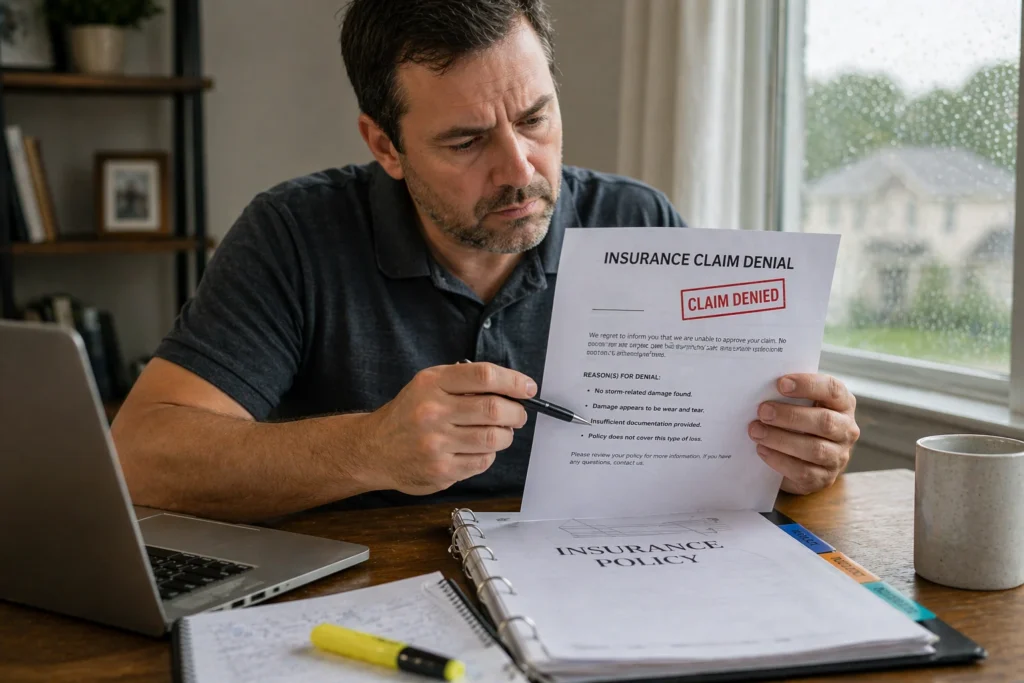
Getting a denial letter after a storm hits hard. It feels final. It feels like the end of the road. It’s not. If you’re searching for What to Do If Your Hail Claim Was Denied in Texas, you’re already doing something most homeowners don’t you’re pushing back. And that matters more than you think.
Hail damage claims are denied more often than people expect across Texas. In cities like Irving, where storms can roll through fast and claims stack up quickly, insurance companies often process inspections under pressure. That means mistakes happen. Damage gets missed. Claims get undervalued or denied outright.
Here’s the reality: a denial is not a verdict. It’s a position. And positions can be challenged. This guide gives you a clear, strategic roadmap. Not just what to do but how to do it effectively so you actually improve your chances of getting paid.
Why Hail Claims Get Denied in Texas
Before you fight back, understand what you’re up against.
Common Reasons for Denial
Insurance companies typically rely on a handful of explanations:
- “No storm-related damage found”
- Damage classified as wear and tear
- Missed filing deadlines
- Lack of documentation
- Policy exclusions
At first glance, these reasons seem firm. But they’re often based on limited information.
Insurance Company Limitations (and Realities)
Adjusters are human. They work fast. And after a major storm, they may inspect dozens of homes in a single day.
That creates problems:
- Inspections can be rushed
- Subtle damage gets overlooked
- Reports rely on generalized assumptions
Interestingly, this kind of decision-making under uncertainty mirrors concepts like Bayesian inference, where conclusions shift as stronger evidence is introduced. Your claim works the same way the more precise your documentation, the stronger your position becomes.
First Steps After a Hail Claim Denial
Take a breath. Then take action.
1. Review the Denial Letter Line by Line
Don’t skim. Analyze.
Look for:
- Specific denial reasons
- References to policy language
- Words like “insufficient” or “inconclusive”
These aren’t dead ends. They’re opportunities.
2. Understand Your Policy
Focus on:
- Deductibles
- Coverage type (ACV vs RCV)
- Exclusions
3. Create a Claim File Immediately
Start compiling:
- Photos and videos
- Inspection reports
- Emails and letters
- Call notes
Organization isn’t optional it’s your advantage.
Re-Inspecting Your Roof the Right Way
This step alone can flip a denied claim.
Why a Second Inspection Changes Everything
Initial inspections are often surface-level.
A second inspection can uncover:
- Hidden shingle bruising
- Granule displacement
- Structural impact damage
What to Look for by Roof Type
Asphalt Shingles
- Circular impact marks
- Granule loss
- Soft bruised areas
Metal Roofs
- Dents
- Fastener damage
- Surface scratches
Tile Roofs
- Cracks
- Chips
- Displacement
DIY vs Professional Inspection
| Factor | DIY | Professional |
| Safety | Risky | Controlled |
| Detail | Limited | Thorough |
| Documentation | Basic | Claim-ready |
| Accuracy | Inconsistent | Reliable |
Strengthening Your Claim with Better Evidence
Evidence wins disputes. Period.
Photo and Video Tips
- Take close-ups and wide shots
- Capture multiple angles
- Document gutters, siding, vents
Use Weather Data
Match your damage to:
- Storm dates
- Hail size
- Wind conditions
Get Expert Reports
Professional reports:
- Identify missed damage
- Provide detailed estimates
- Strengthen your case
This is also where many homeowners realize the importance of understanding ‘How to Document Hail Damage for an Insurance Claim‘, because the difference between weak and strong documentation often determines whether a denial stands or gets overturned.
Requesting a Re-Inspection
How to Do It
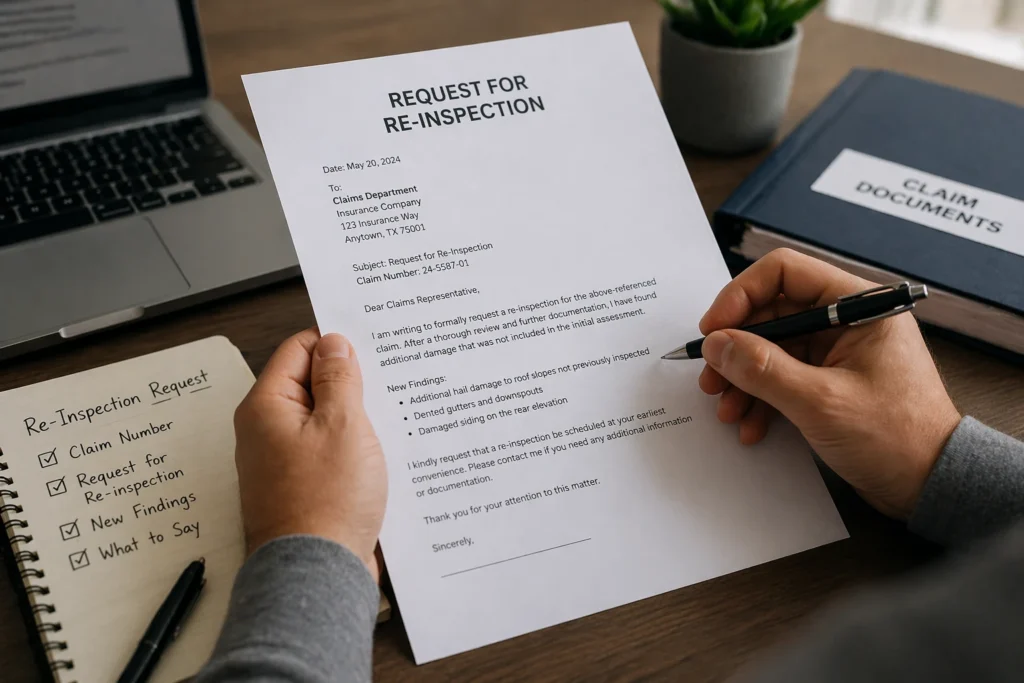
Put it in writing.
Include:
- Claim number
- Request for re-inspection
- New findings
What to Say
Keep it factual.
Example:
“Additional inspection identified damage not included in the original report. Requesting re-evaluation.”
Have a Professional Present
This increases:
- Accuracy
- Accountability
- Claim scope
Filing a Supplement or Dispute
What Is a Claim Supplement?
A request to include missed damages.
When to File
- After new inspection
- When evidence improves
- When estimates differ
Mistakes to Avoid
- Weak documentation
- Rushed submissions
- Lack of clarity
Case Study: Turning a Denial Into Approval
A homeowner in Irving had a denied claim.
They:
- Got a second inspection
- Documented hidden damage
- Matched storm data
- Requested re-inspection
Result? Full approval.
This happens more often than people realize.
When to Hire a Public Adjuster
What They Do
They:
- Represent you
- Document damage
- Handle negotiations
When You Need One
- Large claims
- Repeated denials
- Low offers
In Irving, where storm claims are frequent, this expertise can make a major difference.
Legal Options If Your Claim Is Still Denied
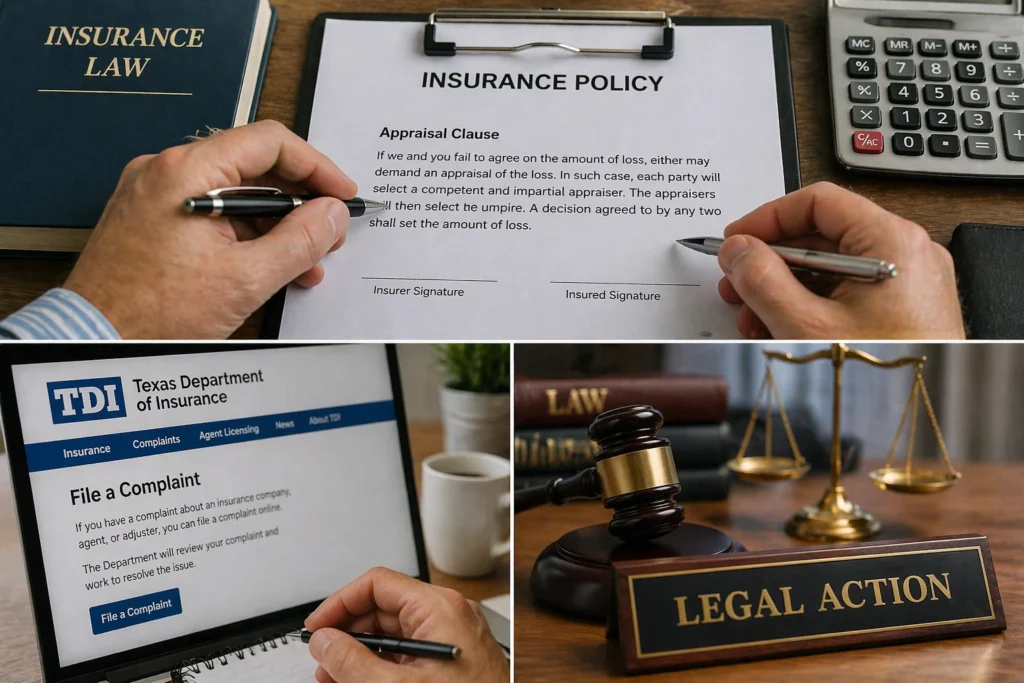
Appraisal Clause
Independent evaluation process.
Texas Department of Insurance
File complaints if needed.
Legal Action
For serious disputes or bad faith.
Timeline: Why Acting Fast Matters
- Policies have deadlines
- Evidence fades over time
- Delays weaken your case
Act early.
Mistakes to Avoid
- Accepting denial too quickly
- Skipping inspections
- Poor documentation
- Waiting too long
Pro Tips for Success
- Stay organized
- Use professional reports
- Communicate in writing
- Stay persistent
Why Texas Hail Claims Are Unique
- Frequent storms
- High claim volume
- Increased scrutiny
That combination creates more denials but also more reversals.
Conclusion: The Denial Is Just the Beginning
If you’re asking What to Do If Your Hail Claim Was Denied in Texas, here’s the real answer:
You don’t stop.
You build a stronger case.
You challenge the decision.
You push forward.
Because denials are often just the first step not the last.
FAQs
Yes, especially if you have new evidence or request a re-inspection.
It depends on your policy, but acting quickly improves your chances significantly.
Most denials are due to “no storm damage found” or damage being labeled as wear and tear.
Yes, a second inspection often reveals damage that was missed initially.
Yes, but having a professional can strengthen your case and improve results.
Clear photos, detailed inspection reports, and storm data are the most effective.
No, it shows you’re proactive and serious about verifying the damage.
It’s a request to include additional damage that wasn’t covered in the original estimate.
Yes, and this is one of the most common reasons valid claims get denied.
With strong documentation and persistence, many denied claims are successfully overturned.