
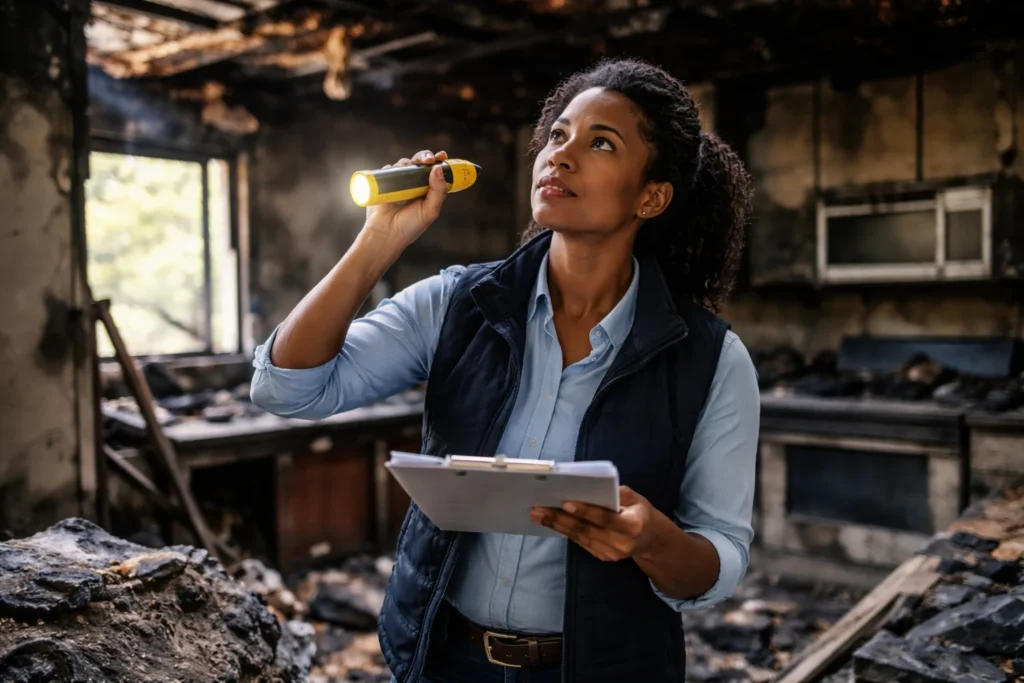
A fire changes everything in minutes. One moment you’re living your routine, the next you’re staring at smoke, debris, and uncertainty. In that moment, one professional becomes central to your recovery—the fire insurance adjuster. Understanding how this role works isn’t just helpful. It can directly impact how much you receive from your insurance claim, how fast you recover, and how much stress you carry along the way. Let’s break it down clearly. No fluff. Just what actually matters when you’re dealing with fire damage and an insurance claim.
What Is a Fire Insurance Adjuster?
A fire insurance adjuster is the person responsible for evaluating your fire damage and determining how much your insurance company will pay. Simple enough. But here’s where it gets interesting. Not all adjusters work for you.
There are three types you need to understand:
- Insurance Company Adjuster – Works directly for your insurer
- Independent Adjuster – Contracted by the insurance company
- Public Adjuster – Works for you, the policyholder
That distinction? It’s everything. Because while all adjusters assess damage, only one is legally obligated to prioritize your financial outcome.
What Does a Fire Insurance Adjuster Actually Do?
After a fire, the process starts quickly. And the adjuster becomes the central figure.
1. Property Damage Inspection
The adjuster visits your property. They look at:
- Structural damage (walls, roof, foundation)
- Smoke contamination
- Water damage from firefighting efforts
- Personal belongings
They’re not just looking. They’re evaluating cost. And small details matter here. A missed item can mean money lost.
2. Documentation and Evidence Collection
Photos. Notes. Measurements. Lists. This is where your claim is built or weakened.
A strong claim includes:
- Detailed item inventory
- Proof of ownership (receipts, photos)
- Pre-loss condition documentation
If it’s not documented, it often doesn’t get paid.
3. Estimating Repair and Replacement Costs
Here’s where numbers start shaping your outcome.
Adjusters calculate:
- Repair costs for your home
- Replacement value of belongings
- Depreciation
And this is where many homeowners get surprised.
| Term | What It Means | Impact on You |
| Replacement Cost | Full cost to replace items | Higher payout |
| Actual Cash Value | Replacement cost minus depreciation | Lower payout |
A fire insurance adjuster may lean toward lower valuations unless challenged.
4. Claim Review and Settlement Recommendation
Once everything is assessed, the adjuster prepares a report.
This report influences:
- Your settlement amount
- What’s covered and what’s denied
- How quickly you get paid
And yes, disagreements happen here often.
Types of Fire Insurance Adjusters Explained
Let’s make this crystal clear.
Insurance Company Adjuster
They represent the insurance company. Their job is to evaluate claims fairly but also to control costs.
Independent Adjuster
They’re hired when insurance companies need extra help, especially after large disasters. Still, they represent the insurer.
Public Adjuster
This is your advocate.
A public adjuster:
- Works only for you
- Builds your claim
- Negotiates on your behalf
For many homeowners in Irving, hiring a public adjuster changes the entire experience.
The Fire Damage Claims Process Step-by-Step
Let’s walk through what actually happens.
Step 1: Filing the Claim
You notify your insurance company. Timing matters. Do this as soon as possible.
Step 2: Initial Inspection
The fire insurance adjuster schedules a visit.
What to expect:
- Walkthrough of the property
- Questions about the incident
- Initial documentation
Be present. Always.
Step 3: Damage Assessment
The adjuster creates an estimate.
This is where details can get missed. And missed details equal lost money.
Step 4: Negotiation
This stage isn’t always obvious, but it’s real.
You can:
- Question the estimate
- Provide additional documentation
- Request revisions
And you should.
Step 5: Settlement
Once both sides agree, payment is issued. Sometimes quickly. Sometimes not.
Common Challenges Homeowners Face
This is where things get frustrating.
Here are the most common issues:
- Undervalued damage
- Incomplete inventory lists
- Delays in communication
- Denied items due to “lack of proof”
- Confusion over policy language
It’s not always intentional. But it happens. A lot.
And when it does, homeowners often feel stuck.
How a Public Adjuster Helps Maximize Your Fire Claim
Let’s talk about leverage. A public adjuster doesn’t just “help.” They reshape the process.
1. Independent Damage Assessment
They inspect your property thoroughly. No rushed walkthroughs. No shortcuts.
2. Detailed Claim Documentation
They build your claim like a case file.
- Complete inventory
- Accurate valuations
- Supporting evidence
3. Negotiation Expertise
They speak the language of insurance. And they know how to push back effectively.
4. Time and Stress Reduction
You’ve already been through enough.
Let someone else handle the back-and-forth.
When Should You Hire a Fire Insurance Adjuster?
Timing matters more than most people realize.
You should consider hiring help:
- Immediately after a fire
- When damages are extensive
- If your claim feels overwhelming
- When delays start happening
- If the offer seems low
The earlier you act, the more control you keep.
Tips for Working with a Fire Insurance Adjuster
Even if you don’t hire a public adjuster, you need to be proactive.
Here’s how:
- Document everything yourself
Take photos. Keep receipts. Write notes. - Be present during inspections
Don’t let anything get overlooked. - Ask for clarification
If something doesn’t make sense, question it. - Don’t rush settlement decisions
First offers are often not final offers. - Keep communication organized
Emails, dates, and names matter.
Key Questions to Ask a Fire Insurance Adjuster
Don’t stay silent. Ask direct questions.
- How did you calculate this estimate?
- What items are excluded and why?
- Can I submit additional documentation?
- What is the timeline from here?
- Is this the final offer?
Clarity reduces mistakes.
Fire Insurance Claims in Irving: Local Considerations
Every location has its nuances.
In Irving and across Texas:
- Repair costs can vary based on contractor demand
- Local building codes affect rebuilding requirements
- Weather-related fire risks can complicate claims
Interestingly, complex systems whether in insurance or science often require careful evaluation and interpretation. In fields like Quantum Decoherence, small unseen interactions can significantly alter outcomes. Insurance claims can feel similar. Small overlooked details can shift your final settlement more than you expect. Working with someone familiar with local conditions gives you an edge.
Mistakes to Avoid During a Fire Insurance Claim
Let’s keep this simple. Avoid these.
- Throwing away damaged items too early
- Accepting the first offer without review
- Failing to document everything
- Not reading your policy
- Waiting too long to get help
One mistake can cost thousands.
Final Thoughts: Take Control of Your Claim
A fire insurance adjuster plays a major role in your recovery. But they don’t control everything—you do. The more informed you are, the stronger your position becomes. I’ve seen it firsthand. Two homeowners. Same damage. Completely different outcomes. The difference? One stayed passive. The other got involved, asked questions, and pushed for accuracy.
Be the second one. Because after a fire, recovery isn’t just about rebuilding your home. It’s about making sure you receive what you’re truly owed and moving forward with confidence.
FAQs
A fire insurance adjuster evaluates property damage, reviews your policy, and determines how much your insurance company should pay for your claim.
You can work with them, but remember they represent the insurer, so it’s important to review their findings carefully.
A public adjuster is a type of fire insurance adjuster who works exclusively for you, not the insurance company.
You should consider hiring one immediately after a fire, especially if the damage is significant or the claim becomes complicated.
They assess structural damage, personal property loss, and repair costs using industry tools, pricing databases, and policy guidelines.
Yes, you can challenge estimates, provide additional documentation, and request revisions to improve your settlement.
Document everything with photos and videos, make a list of damaged items, and gather any proof of ownership you have.
It can take a few weeks to several months depending on the extent of damage, documentation, and negotiation process.
Delays often happen due to incomplete documentation, disputes over damage estimates, or slow communication between parties.
In many cases, yes public adjusters often identify overlooked damages and negotiate more effectively on your behalf.